Comprehensive Commercial Property Management Services by Leading Commercial Management Companies
Managing a diverse portfolio of commercial real estate assets demands integrated expertise, streamlined processes, and proactive strategies to protect owner returns and tenant satisfaction. Commercial property management services combine lease administration, financial oversight, maintenance coordination, and tenant relations into a unified solution that maximizes net operating income (NOI) and minimizes vacancies. In this article, you will discover:
- the full scope and importance of commercial property management services;
- lease management methodologies;
- financial and maintenance best practices;
- technology-driven enhancements;
- selection criteria for your property manager; and
- specialized approaches for office, retail, industrial, and medical properties.
By aligning each theme under the umbrella of commercial property management companies, you will gain a clear roadmap to optimize asset value, strengthen tenant retention, and leverage emerging PropTech.
What Are Commercial Property Management Services and Why Are They Essential?
Commercial property management services define the comprehensive suite of solutions that oversee leasing, financial reporting, maintenance, and tenant relations, ensuring properties operate efficiently and deliver consistent investment returns. This integrated approach streamlines day-to-day operations, reduces risk exposure, and safeguards asset longevity by combining expert lease administration with preventive maintenance protocols. For example, a coordinated tenant screening workflow prevents delinquency and cultivates stable occupancy, directly boosting NOI.
The Value of Property Management Services: An Experiment
Research utilizing an experimental approach to assess the impact of property management services on property value found that professional management significantly adds value, particularly to older and more dilapidated properties. This suggests that high-quality property management can enhance asset worth.
This research supports the article’s assertion regarding the essential nature and value-adding capabilities of commercial property management services in optimizing asset value and protecting owner returns.
The essential nature of these services stems from their ability to unify asset optimization and legal compliance, laying the foundation for targeted lease strategies, budget forecasting, and condition monitoring. Understanding core service components prepares us to examine how management firms execute lease administration precisely.
What Does Commercial Real Estate Management Involve?
- Conducting market analysis to set competitive rental rates
- Coordinating tenant leasing processes from marketing to move-in
- Administering lease agreements and CAM reconciliations
- Managing vendor relationships for maintenance and repairs
- Generating financial statements and performance dashboards
These functions establish transparent accountability and consistent cash flow, paving the way for asset-level optimization and tenant satisfaction. Next, we explore techniques that directly enhance property value.
How Do Commercial Management Companies Maximize Property Value?
Leading management firms apply strategic asset enhancement techniques that align operational efficiencies with market trends to boost capital appreciation and rental income.
By integrating these enhancements, property managers foster continual value growth that supports investor objectives and transitions us to examining property types they manage.
What Types of Commercial Properties Are Managed?
Commercial management companies support a broad spectrum of property categories, each requiring tailored strategies and compliance considerations. The primary classes include:
- Office buildings for professional and corporate tenancy
- Retail centers and storefronts serving consumer traffic
- Industrial warehouses and distribution facilities
- Medical office complexes housing healthcare practices
Specializing across these categories ensures subject-matter expertise in zoning, health and safety regulations, and specialized tenant needs. Next, we will focus on the tenant engagement practices that underpin those tailored approaches.
How Do Commercial Property Managers Ensure Tenant Satisfaction?
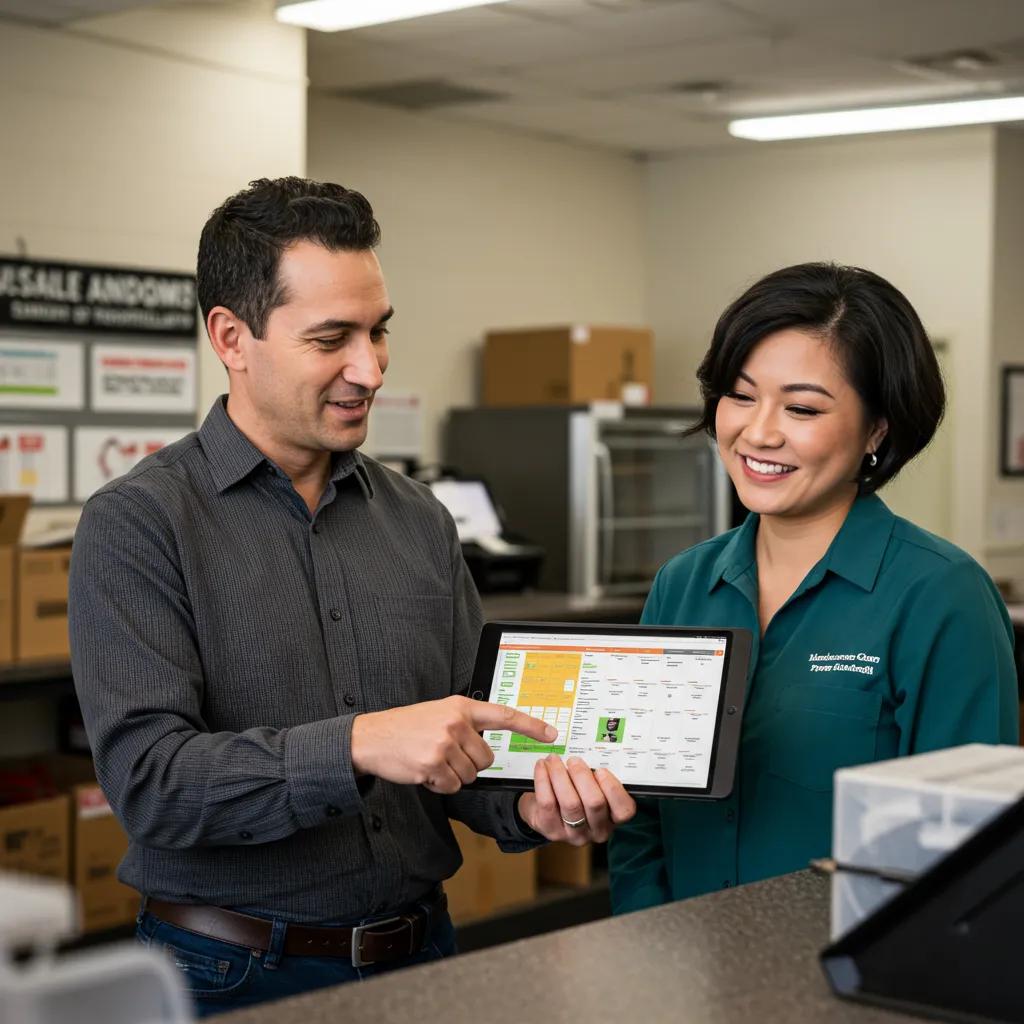
Tenant satisfaction hinges on prompt service response, clear communication, and value-added amenities that align with lease commitments. Property managers enhance the tenant experience by:
- Proactive Communication: Providing regular updates on maintenance schedules and property improvements.
- Responsive Service Requests: Coordinating emergency repairs within predefined Service Level Agreements.
- Community Building Initiatives: Organizing tenant meetings, amenity upgrades, and shared facility enhancements.
- Transparent Billing: Delivering CAM reconciliations with documented expense breakdowns.
These practices build trust and encourage lease renewals, directly linking positive tenant experiences to sustained occupancy and stronger investment performance.
How Do Commercial Management Companies Handle Commercial Lease Management?
Commercial lease management integrates tenant vetting, agreement negotiation, rent administration, and dispute resolution to maintain legal compliance and financial stability. A structured lease management process mitigates risk, enhances cash flow, and protects owner interests by enforcing terms and fostering long-term occupancy.
What Are the Key Steps in Tenant Screening and Selection?
Thorough tenant screening reduces default risk and aligns occupants with property standards. The selection process includes:
- Verifying financial statements and credit histories
- Evaluating business operations for compatibility with zoning and building infrastructure
- Conducting reference checks with previous landlords
- Assessing corporate reputation and strategic fit for the property
A rigorous vetting workflow not only secures reliable tenants but also preserves property brand value, setting the stage for precise lease negotiations.
How Is Lease Agreement Negotiation Conducted?
Negotiation of commercial lease agreements involves balancing landlord protections with tenant flexibility to achieve mutually beneficial terms. Key negotiation elements include:
- Defining base rent, Common Area Maintenance (CAM) charges, and escalation clauses
- Establishing lease duration, renewal options, and tenant improvement allowances
- Incorporating legal compliance for local building codes and ADA requirements
- Structuring security deposit, insurance obligations, and default remedies
These negotiation frameworks crystallize responsibilities and ensure enforceable contracts, guiding effective rent collection practices.
What Are Effective Rent Collection and Lease Enforcement Practices?
Efficient rent collection and enforcement practices maintain reliable cash flow and uphold contractual terms. Managers implement:
- Automated invoicing and electronic payment portals
- Late-fee structures aligned with state regulations
- Monthly reconciliation of arrears followed by formal notices
- Structured eviction procedures when necessary
By combining automation with clear enforcement policies, lease administration teams secure timely payments and preserve owner returns.
How Do Lease Renewals Improve Tenant Retention?
Strategic lease renewal programs incentivize continuity and reinforce tenant relationships through:
- Early renewal offers with competitive rental rates
- Customized fit-out or improvement proposals to enhance space utility
- Long-term rent stabilization clauses to reduce escalation anxiety
- Loyalty rewards or concessions for extended lease commitments
Focused renewal initiatives reduce vacancy cycles and shore up occupancy projections, creating a stable revenue foundation.
How Are Tenant Disputes Resolved Professionally?
Professional dispute resolution protects landlord-tenant relationships by applying structured conflict management protocols:
- Engaging third-party mediation or binding arbitration clauses
- Documenting grievances and tracking resolution timelines
- Implementing temporary accommodations during maintenance disruptions
- Reviewing dispute outcomes for process improvement
This approach preserves goodwill and mitigates legal exposure, reinforcing tenant confidence and compliance.
What Financial Management Solutions Do Commercial Property Management Companies Provide?
Financial management for commercial properties encompasses revenue collection, expense forecasting, performance reporting, and net operating income optimization to deliver transparent results and proactive budgeting.
How Is Rent Collection Streamlined for Commercial Properties?
Modern rent collection strategies leverage technology and process automation to accelerate cash flow:
- Electronic payment portals integrated with property accounting systems
- Scheduled reminders and auto-debit options for tenant convenience
- Real-time ledger updates and tenant balance dashboards
- Automated late-notice generation and fee application
Streamlined rent collection maximizes liquidity and reduces administrative overhead, enabling managers to focus on strategic financial planning.
What Budgeting and Expense Management Practices Are Used?
Effective budgeting and expense oversight depend on centralized vendor coordination and predictive forecasting. The following table outlines core budgeting practices:
These practices enforce fiscal discipline and align spending with property performance goals, supporting data-driven financial oversight.
How Are Financial Reports and KPIs Used to Optimize Performance?
Performance reports and key metrics transform raw data into actionable insights through:
- Monthly income statements tracking rent, CAM, and ancillary fees
- Occupancy rate analysis compared to market benchmarks
- Net Operating Income (NOI) calculations highlighting profit margins
- Expense ratio dashboards evaluating cost efficiency
Leveraging these reports enables managers to pinpoint underperforming assets and implement targeted value-add strategies.
How Do Property Managers Maximize Net Operating Income (NOI)?
Property managers enhance NOI by combining revenue growth and expense control initiatives:
- Rent Optimization: Adjusting rates to reflect market demand and property improvements.
- Expense Audits: Identifying cost-saving opportunities in service contracts.
- Revenue Diversification: Introducing ancillary income streams such as parking or signage fees.
- Efficiency Upgrades: Implementing energy-efficient systems to reduce utility expenses.
By balancing these levers, managers secure stronger returns for investors and drive portfolio performance.
What Are the Best Practices in Commercial Property Maintenance Services?
Preventive maintenance, emergency repair management, and regular inspections form the backbone of property longevity, reducing lifecycle costs and preserving asset value.
How Are Preventative Maintenance Programs Implemented?
A preventive maintenance program schedules regular equipment checks and facility care to mitigate breakdown risks:
- Developing annual maintenance calendars for HVAC, plumbing, and electrical systems
- Prioritizing equipment based on criticality and risk profiles
- Assigning qualified vendors with performance-based contracts
- Tracking service histories to refine maintenance intervals
Proactive maintenance minimization of repair emergencies leads to consistent operational uptime.
The Economics of Maintenance Strategies in Large-Scale Commercial Buildings
A study examining maintenance strategies in large-scale commercial buildings concluded that an optimal approach must be tailored to specific building characteristics, budgetary constraints, and technological infrastructure. It emphasized leveraging modern technologies and economic forecasting to align maintenance with operational and financial objectives, highlighting the importance of preventive and predictive maintenance for efficiency, cost optimization, and asset longevity.
This research directly supports the article’s discussion on best practices in commercial property maintenance services, particularly the implementation of preventive maintenance programs and their impact on asset longevity and cost reduction.
What Is the Process for Emergency Repairs and Vendor Management?
Emergency repair protocols and vendor oversight ensure rapid response and quality control:
- Establishing 24/7 service hotlines for urgent tenant requests
- Mobilizing a pre-qualified vendor network with clear response timelines
- Documenting work orders and conducting post-service quality inspections
- Reviewing vendor performance metrics and cost-effectiveness quarterly
Rapid, reliable repair services protect tenant safety, reinforcing satisfaction and compliance.
How Do Property Inspections Support Asset Longevity?
Routine property inspections identify emerging issues and maintain compliance:
- Conducting bi-annual walkthroughs to assess structural, safety, and cosmetic conditions
- Utilizing detailed inspection checklists aligned with regulatory standards
- Generating corrective work orders with priority ratings
- Monitoring rectification progress through centralized dashboards
Inspection-driven maintenance planning extends asset lifespan and prevents costly deferred repairs.
How Do Commercial Management Companies Use Technology to Enhance Property Management?
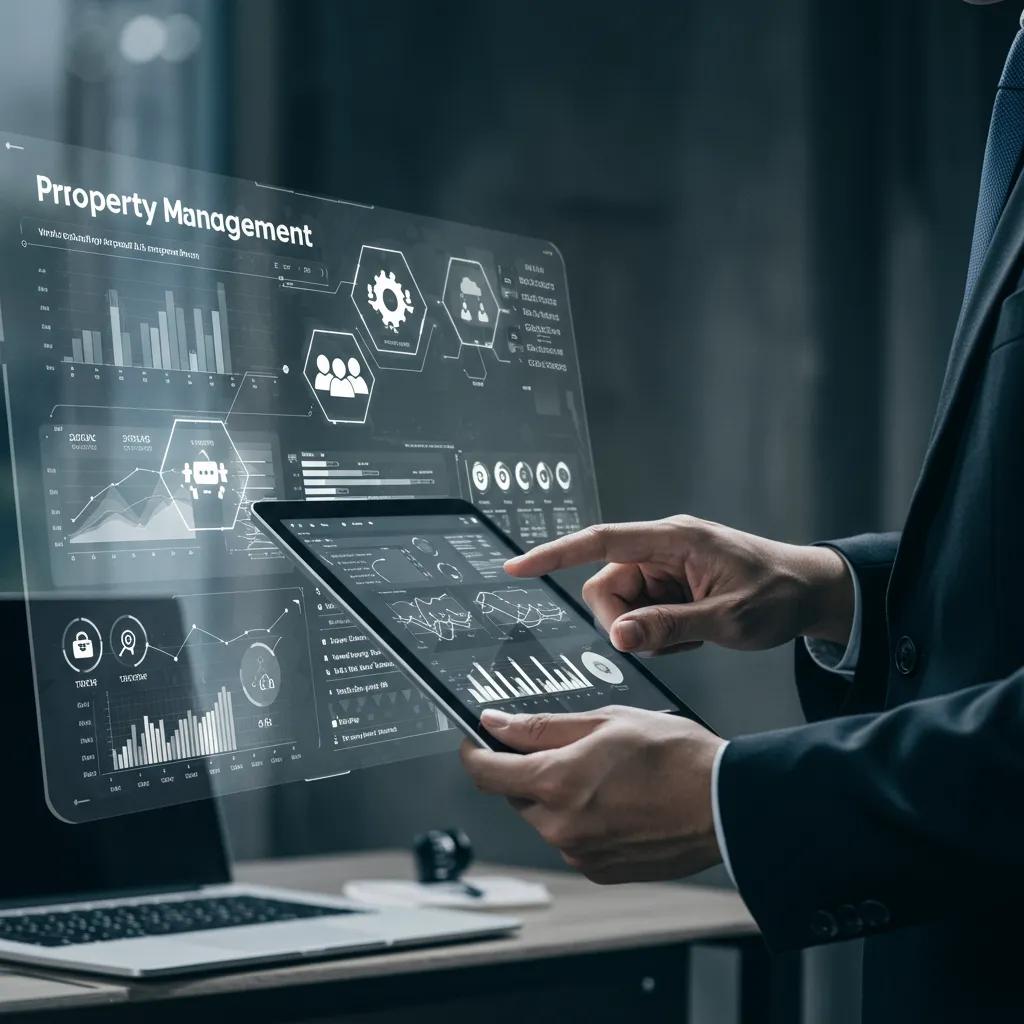
Technology adoption accelerates decision-making, automates routine tasks, and unlocks data-driven strategies for property portfolios of all sizes.
What Commercial Property Management Software Solutions Are Available?
A range of PropTech platforms supports integrated property operations:
- Cloud-based accounting and lease administration suites
- Maintenance management systems with mobile work order capabilities
- Tenant portals for communication, payments, and document access
- Data visualization tools for performance analytics
These solutions centralize oversight, improve transparency, and reduce manual workflows.
How Are AI and Automation Transforming Commercial Property Operations?
AI-driven and automated tools optimize workflows and predictive insights:
- Machine learning algorithms forecasting maintenance needs based on usage patterns
- Chatbots handling tenant inquiries and scheduling service appointments
- Automated invoice processing and vendor reconciliation
- Predictive analytics for lease expiration and rent benchmarking
By embracing these innovations, managers elevate efficiency and preempt operational challenges.
How Does Data Analytics Improve Property Performance?
Data analytics platforms aggregate financial, maintenance, and market data to reveal performance trends:
These insights empower evidence-based decision-making that aligns portfolio strategies with market dynamics.
What Role Does Smart Building Technology Play in Management?
Smart building systems integrate IoT sensors and automation to enhance sustainability and tenant comfort:
- Automated lighting and HVAC controls responding to occupancy levels
- Remote monitoring of energy consumption and water usage
- Access control and security management via mobile credentials
- Predictive maintenance alerts from equipment condition sensors
Smart integrations reduce utility costs and support green building certifications, elevating property appeal.
How to Choose the Best Commercial Property Manager for Your Investment?
Selecting the right management partner requires targeted evaluation of expertise, credentials, and service offerings aligned with investment goals.
What Questions Should You Ask When Hiring a Commercial Property Manager?
When interviewing prospective managers, inquire about:
- Their track record with similar property types and portfolio sizes.
- The technology platforms they deploy for lease administration and maintenance.
- Fee structures, including base management and leasing commissions.
- Communication protocols and reporting frequency.
- Emergency response and vendor management processes.
These inquiries ensure alignment of capabilities with owner expectations and property requirements.
What Are the Benefits of Professional Commercial Property Management?
Engaging specialized commercial property management companies delivers clear advantages:
- Maximized Returns: Through revenue optimization and cost containment.
- Operational Efficiency: By centralizing services and automating workflows.
- Risk Mitigation: Via regulatory compliance and proactive maintenance.
- Tenant Stability: Achieved through dedicated relationship management.
Professional management translates into time savings and enhanced investment performance.
What Licensing and Certifications Should You Look For?
Credibility and compliance are confirmed by industry credentials such as:
- Certified Property Manager (CPM) or Real Property Administrator (RPA) designations
- State-issued real estate broker or community association manager licenses
- ISO or BOMA facility management certifications
- Membership in professional associations like IREM or BOMA International
These qualifications signal adherence to best practices and ongoing professional development.
What Are the Different Types of Commercial Properties Managed by Commercial Management Companies?
Commercial management firms deploy specialized strategies for each segment of the real estate market, tailoring services to unique operational demands.
How Is Office Property Management Specialized?
Office property management focuses on:
- Creating efficient floor-plan utilization for corporate tenants
- Implementing tenant improvements like open-plan workstations and conference facilities
- Coordinating building systems for IT infrastructure and security
- Managing shared amenities such as lobbies, elevators, and parking
Specialized office services ensure professional environments that attract and retain knowledge-industry tenants.
What Are the Unique Challenges in Retail Property Management?
Retail management addresses consumer-facing requirements through:
- Optimizing tenant mix for complementary storefronts
- Scheduling building improvements around peak shopping seasons
- Complying with signage ordinances and point-of-sale infrastructure needs
- Conducting foot-traffic analysis to guide leasing strategies
These efforts maintain vibrant retail centers that drive footfall and sales.
How Is Industrial Property Management Tailored to Logistics Needs?
Industrial management delivers solutions for warehousing and distribution operations:
- Ensuring high bay clearances, dock-high loading, and heavy-power capabilities
- Coordinating yard management and traffic flow for freight handling
- Implementing specialized fire-suppression and environmental controls
- Monitoring utility usage and offering process-improvement consultations
By aligning facility specifications with logistics workflows, managers enhance tenant productivity and asset value.
What Does Medical Office Property Management Entail?
Medical office complexes require regulated environments that comply with healthcare standards:
- Maintaining sterile HVAC filtration and specialized plumbing for clinical spaces
- Coordinating compliance with HIPAA, ADA, and health department regulations
- Managing medical waste disposal and biohazard vendor relationships
- Ensuring reliable emergency power and security systems for patient safety
Expertise in these niche requirements creates compliant, patient-focused environments.
Commercial property management companies deliver a cohesive blend of leasing expertise, financial acumen, maintenance coordination, and technology adoption to protect and enhance real estate investments. By unifying these core disciplines, they maximize asset value, streamline operations, and foster long-term tenant relationships across office, retail, industrial, and medical segments. Partnering with a qualified management firm backed by professional credentials ensures regulatory compliance, proactive risk management, and consistent returns. Engage a specialized commercial property management company today to transform your real estate portfolio into a performance-driven investment.