
A triple net lease (NNN) is a commercial lease structure in which the tenant pays base rent plus three property expenses: taxes, insurance, and maintenance. Investors favor NNN leases because the lessee absorbs cost fluctuations, reducing the owner’s financial and managerial responsibilities.
Key Takeaways
- A triple net lease shifts property taxes, insurance, and maintenance costs from the landlord to the tenant.
- The tenant pays base rent and utilities plus a pro-rata share of taxes, insurance, and common area maintenance.
- This structure reduces the owner’s financial and managerial burden while protecting net operating income.
- Tenants absorb cost fluctuations, which incentivizes them to maintain the property and control expenses.
What Is a Triple Net Lease?
A triple net lease is a commercial lease structure in which the tenant pays base rent and utilities plus three additional property expenses: insurance, maintenance, and taxes. The arrangement shifts those cost categories from the landlord to the tenant, and that division of responsibility defines the entire agreement.
The structure is best understood through its three “nets.” Under a triple net lease, the tenant pays a pro-rata share of the property’s real estate taxes, insurance, and common area maintenance costs, according to LoopNet’s breakdown of NNN costs and risks. Cornell Law School’s Legal Information Institute describes the same three obligations as insurance, maintenance, and taxes. Each net represents a separate expense line, and the tenant absorbs all three.
Triple net lease explained in practical terms: the tenant covers the costs that keep the building running. Those operating expenses include repairs, maintenance, trash removal, landscaping, and parking lot maintenance, as Commercial Real Estate Loans notes in its May 6, 2022 analysis of NNN benefits and drawbacks. For owners of commercial assets, including warehouse and industrial property, this allocation reduces the financial and managerial burden carried by the landlord.
What Expenses Does the Tenant Pay Under an NNN Lease?
The tenant pays base rent, utilities, and the three nets. Those nets cover real estate taxes, property insurance, and common area maintenance. Operating costs tied to the property, from repairs to parking lot upkeep, fall within the tenant’s share.
How Does a Triple Net Lease Differ From a Gross Lease?
A gross lease bundles operating expenses into a single rent payment. A triple net lease separates them. The tenant pays base rent plus a pro-rata share of taxes, insurance, and maintenance, which keeps each cost visible and itemized. Integrity Property Management prioritizes clear communication through regular updates and online portals.

How Do the Three Nets Work?
A triple net lease transfers three specific property expenses from the landlord to the tenant. These three nets are property taxes, property insurance, and common area maintenance costs. This structure fundamentally changes the financial relationship in a commercial lease. The tenant assumes direct responsibility for variable operating costs that would otherwise erode an owner’s net operating income.
What expenses fall under each net in a triple net lease?
The first net covers property taxes assessed by local government. The second net includes property insurance premiums for the building. The third net, common area maintenance, encompasses operating expenses such as repairs, trash removal, and general upkeep. Tenants typically pay utilities directly to the provider, while the three net amounts are usually paid to the landlord. The landlord then remits those funds to the taxing authority, insurer, and vendors.
Why does a triple net lease incentivize tenant care?
Because the tenant covers cost fluctuations, the tenant is incentivized to keep up the property. A tenant who controls energy use or reports minor leaks early reduces the operating expenses they pay. This alignment protects the asset’s condition over the lease term. For an investor, this means fewer surprise capital calls and a more predictable income stream. The property owner carries less financial and managerial responsibility while the tenant’s direct exposure to costs encourages responsible use.
What Are the Benefits for Investors?
Triple net leases reduce the financial and managerial burden that investors carry on a commercial property. The structure shifts much of the operating cost to the tenant, which protects owner returns. A triple net lease explained in plain terms is a commercial lease where the lessee pays base rent and utilities plus three additional property expenses: insurance, maintenance, and taxes. That division of responsibility sits at the center of the structure’s appeal.
Triple net leases are very popular for investors because they carry less financial and managerial responsibility over the property. The same source observes that investors face less risk because the lessee covers much of any cost fluctuation. A tenant who absorbs those swings has a direct incentive to keep the property in good condition.
What Costs Does the Tenant Cover?
The three “nets” in a triple net lease are property taxes, property insurance, and operating expenses. The tenant pays a share of each on top of base rent and utilities. Investors who want a clearer picture of how these obligations are divided can review the investor services overview.
How Does Professional Management Support Returns?
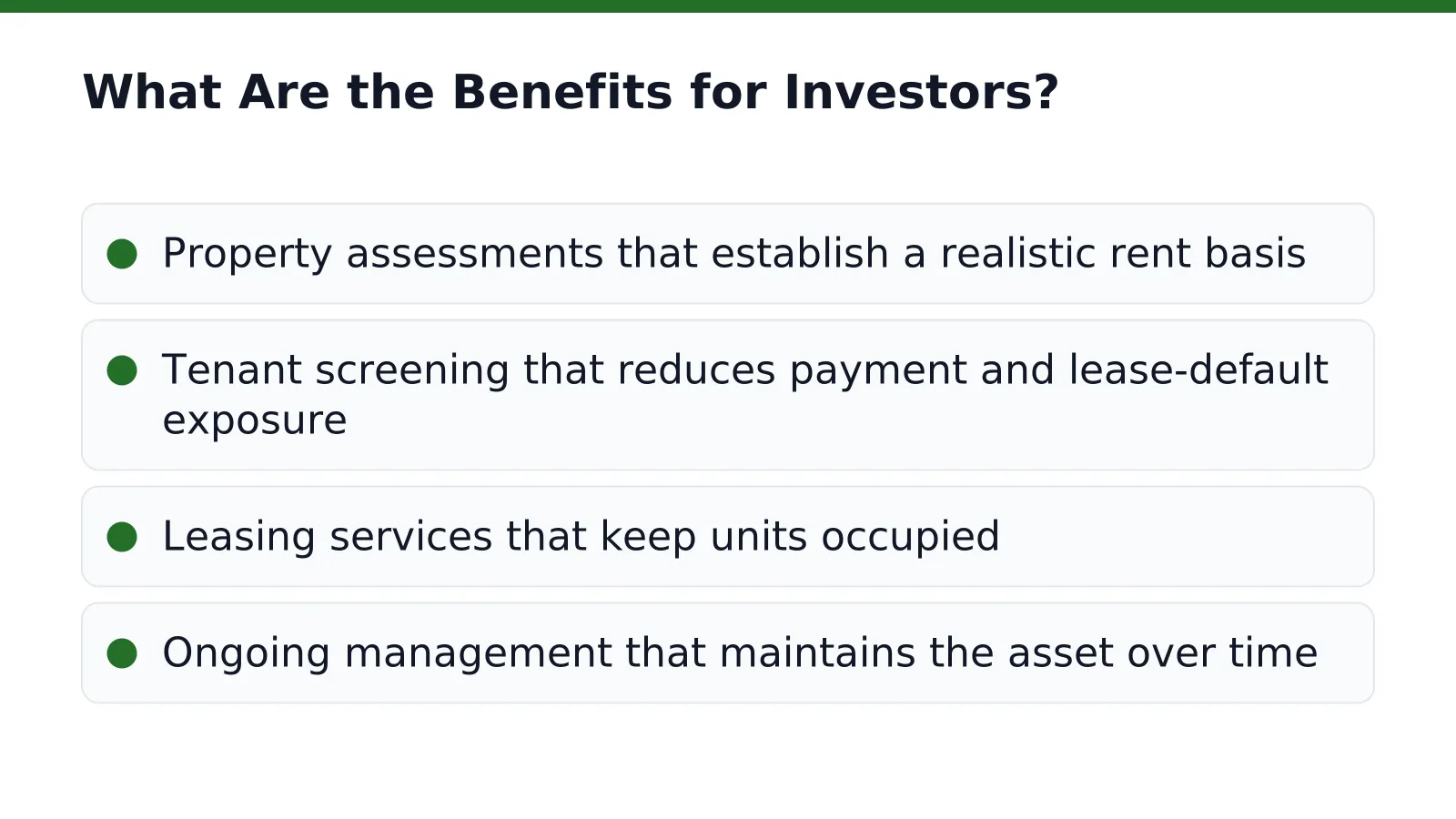
Integrity Property Management helps maximize returns from investment properties through professional management services. The company offers property assessments, tenant screening, leasing services, and ongoing management to support investors. Those services give owners a structured system for protecting income and reducing vacancy risk.
- Property assessments that establish a realistic rent basis
- Tenant screening that reduces payment and lease-default exposure
- Leasing services that keep units occupied
- Ongoing management that maintains the asset over time
For owners weighing a triple net structure, the core benefit is predictable, lower-touch income. Integrity Property Management provides personalized service with dedicated managers, comprehensive assessments, and customized plans.

What Risks Should Owners Weigh?
Owners who sign a triple net lease transfer most operating costs to the tenant, but that shift does not eliminate risk. Unforeseen maintenance costs and tax increases land on the lessee unless both parties agree to a cap on the lessee’s responsibility, Without that cap, cost disputes can surface mid-lease and strain the owner-tenant relationship.
A triple net lease explained plainly shows where exposure remains. The structure reduces an owner’s financial and managerial burden, yet the property still demands attention.
What Happens When Maintenance Costs Rise Unexpectedly?
Uncapped expenses create friction. The lessee covers unforeseen maintenance and tax increases unless a cap is negotiated, Owners who skip that negotiation leave the outcome to chance. Scheduled inspections and quick responses prevent costly repairs and protect property value, and Integrity Property Management builds both into its maintenance approach.
How Can Owners Reduce Lease Risk?
Clear communication lowers disputes before they start. Integrity Property Management prioritizes regular updates and online portals, which build trust with property owners and tenants alike. Documented communication also creates a record when cost questions arise.
Owners should weigh three core exposures before signing:
- Uncapped expenses: maintenance and tax increases fall to the tenant, with no ceiling unless negotiated.
- Deferred maintenance: skipped upkeep reduces long-term property value.
- Communication gaps: unclear reporting turns routine cost questions into conflicts.
A cap agreement, a proactive maintenance schedule, and transparent reporting address each risk directly.
Is a NNN Lease Right for You?
A triple net lease suits investors who want passive income with fewer day-to-day responsibilities. The structure shifts taxes, insurance, and maintenance costs to the tenant, which reduces the owner’s financial exposure and management burden. That division of responsibility makes the NNN model attractive to owners who prefer predictable returns over hands-on operations.
The decision still depends on the property and the investor’s goals. A triple net lease explained in full shows both sides: lower landlord costs, but less control over how the tenant maintains the asset. Owners who want steady income without daily oversight often find the tradeoff worthwhile.
What Should an Investor Weigh Before Choosing a NNN Lease?
Three factors deserve attention before signing.
- Tenant quality. The tenant carries the expense load, so its financial stability matters.
- Property condition. Existing maintenance issues can complicate lease terms and impact overall asset value.
- Lease terms. Cost allocations and renewal clauses define the long-term return.
Investors who prefer a guided approach can lean on professional support. Integrity Property Management provides personalized service with dedicated managers, comprehensive assessments, and customized plans for each property. The company brings over 50 years of sales, leasing, and development experience to that evaluation.
How Can an Owner Evaluate the Fit?
A structured review removes guesswork. Integrity Property Management offers a free rental property assessment, which helps owners compare lease structures against their income targets. The assessment clarifies which expenses a tenant would absorb and which remain with the owner. Owners then decide with clear numbers rather than assumptions.
FAQ
What is a triple net lease?
A triple net lease is a commercial lease structure where the tenant pays base rent plus three property expenses: taxes, insurance, and maintenance. This shifts those cost categories from the landlord to the tenant.
What expenses does the tenant pay under an NNN lease?
The tenant pays base rent, utilities, and the three nets: real estate taxes, property insurance, and common area maintenance. Operating costs like repairs and parking lot upkeep also fall within the tenant’s share.
How does a triple net lease differ from a gross lease?
A gross lease bundles operating expenses into a single rent payment, while a triple net lease separates them. The tenant pays base rent plus a pro-rata share of taxes, insurance, and maintenance, keeping each cost itemized.
Conclusion
A triple net lease shifts taxes, insurance, and maintenance to the tenant while leaving the owner with less day-to-day responsibility. That tradeoff rewards investors who value predictable income over direct control of the asset. Before signing, weigh tenant quality, property condition, and lease terms, and confirm which expenses the tenant absorbs and which remain with the owner. A structured review replaces assumptions with clear numbers, so the decision rests on the investor’s own income targets and goals.