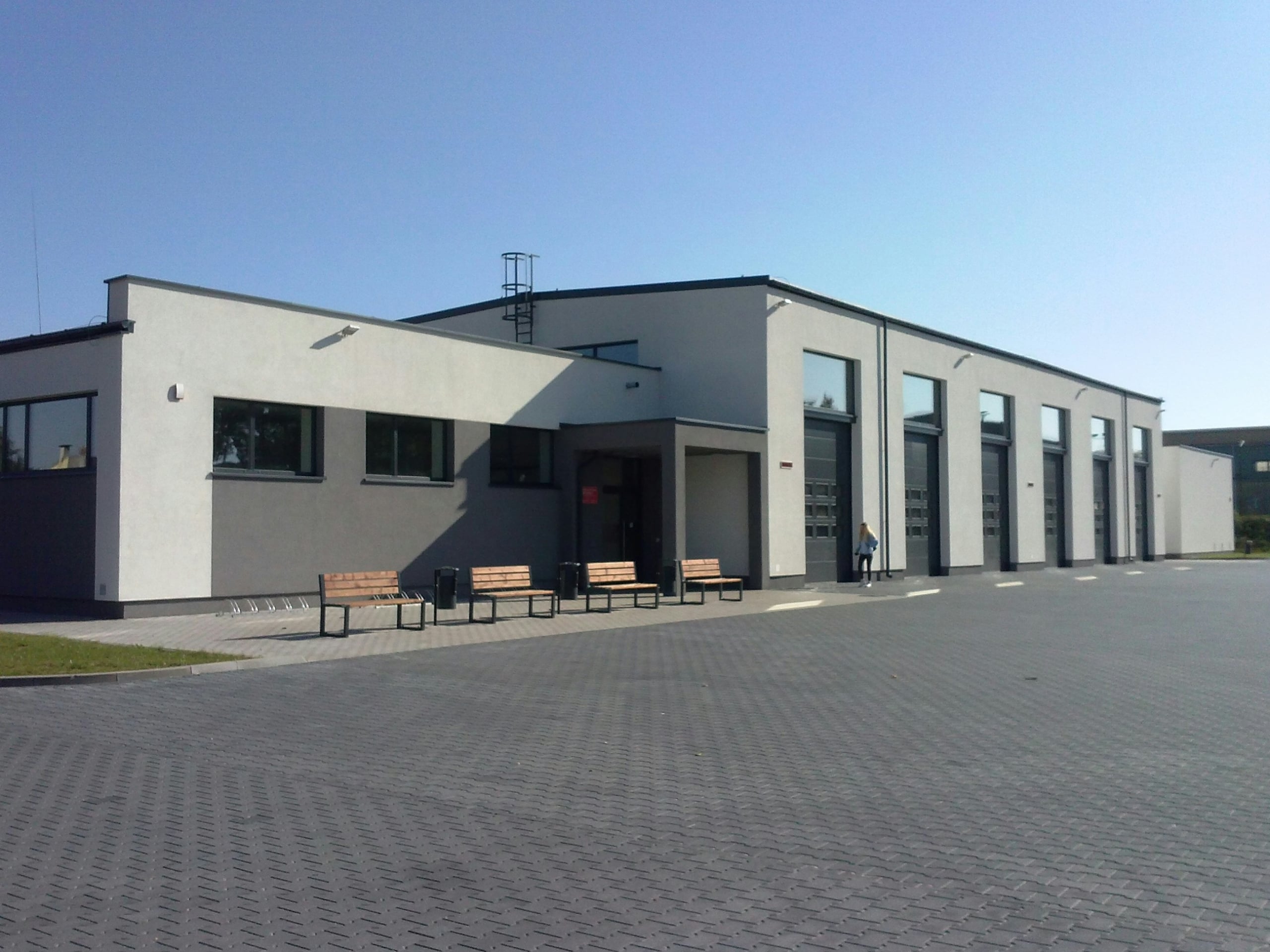
If you own a warehouse or industrial building in Anderson County, you already know the asset is doing quiet, dependable work. There are no 2 a.m. calls about a broken garbage disposal, no seasonal turnover scramble, no twelve tenants with twelve sets of expectations. A single distribution tenant on a long lease can feel, on paper, like the most hands-off real estate you’ll ever own.
And then the roof starts to fail over forty thousand square feet of someone else’s inventory. Or the tenant’s lease comes up for renewal and you realize you have no idea whether your asking rate is competitive in today’s market. Or your “triple net” reconciliation arrives and you can’t actually explain to the tenant why their CAM charges jumped 18% over last year.
This is the paradox of industrial real estate: the day-to-day is calm, but the stakes per event are enormous. One mismanaged roof, one botched lease renewal, one extended vacancy in a specialized building can erase years of clean cash flow. Warehouse and industrial assets reward owners who manage them with discipline and punish those who manage them casually.
This guide walks through what commercial warehouse property management actually involves in the Upstate, how it differs from the residential management most people picture, and how to think clearly about whether to bring in a professional partner. It’s written for the owner or investor who wants the asset to keep working without becoming a second job.
Why Anderson and the I-85 Corridor Reward Warehouse Owners
Location is the first thing that makes Anderson industrial property worth managing well, because the underlying demand is structural, not a passing trend.
Anderson sits directly on Interstate 85, the spine of the Southeast’s manufacturing and logistics economy, roughly an hour and a half from Charlotte and within a comfortable drive of Atlanta. That position has turned the broader Greenville–Spartanburg–Anderson region into one of the busiest industrial corridors in the country, anchored by major manufacturers and the steady stream of suppliers, distributors, and third-party logistics operators that orbit them. For a warehouse owner, this means something specific: a deep, renewable pool of potential tenants who need exactly the kind of space you own.
The local lease market reflects that demand. Industrial and warehouse space in Anderson County leases across a wide band, from around five dollars per square foot per year for older bulk-storage buildings to the low-to-mid teens for newer flex and Class A space with modern dock configurations and office build-out. That spread is itself an argument for professional management: the difference between pricing your building at the bottom of the range and positioning it correctly can be tens of thousands of dollars annually, and it depends entirely on understanding how the local market values clear height, dock-door ratios, power capacity, and location relative to the interstate.
The point is not that Anderson is a hot market in some hype-cycle sense. It’s that the demand is durable, the rate structure is nuanced, and an owner who manages the asset with real market knowledge captures meaningfully more value than one who simply renews the existing tenant at last year’s rate because it’s easy.
What Commercial Warehouse Property Management Actually Includes
When most people hear “property management,” they picture collecting rent and fixing toilets. Industrial management is a different discipline. A professional warehouse property manager is responsible for protecting and growing the value of a large, specialized physical asset while keeping a commercial tenant productive and a lease performing. In practice, the work falls into five connected areas.
Lease administration and enforcement. Commercial leases are long, complex, and full of obligations that both sides forget over time — escalation clauses, maintenance responsibilities, insurance requirements, renewal windows, and expense pass-throughs. A manager tracks every date and obligation so that rent escalations actually get applied, insurance certificates stay current, and renewal conversations start early enough to avoid a scramble.
Financial management and reporting. This means rent collection, yes, but also operating expense budgeting, common area maintenance (CAM) reconciliation, and clear, regular financial reporting to the owner. For an industrial asset, the financial picture is where most of the value is won or lost, and it’s the area where owners most often discover they’ve been leaving money on the table.
Physical asset and maintenance management. Warehouses have a maintenance profile unlike any other property type — roofs measured in acres, dock equipment, fire suppression systems, heavy electrical service, and pavement built to carry tractor-trailers. Good management is overwhelmingly preventive, because the failures here are expensive and disruptive.
Tenant relationship and retention. A vacant warehouse is the single most damaging event in industrial ownership, and the best defense is a tenant who renews. Retention is built through responsiveness, reliability, and treating the tenant’s operation as something worth protecting.
Compliance and risk management. Zoning, environmental considerations, building codes, insurance adequacy, and South Carolina-specific regulatory requirements all sit on the owner’s shoulders unless someone is actively managing them.
The thread connecting all five is that industrial management is about stewardship of a high-value asset, not just collection of a monthly check. Done well, it’s largely invisible. Done poorly, it surfaces as a series of expensive surprises.
How Warehouse Management Differs From Residential and Retail
It’s worth being precise about why warehouse management is its own category, because the differences shape everything about how the asset should be handled.
Residential management is a high-volume, high-touch business: many small tenants, frequent turnover, emotional dynamics, and a steady drumbeat of small maintenance issues. Retail management revolves around foot traffic, co-tenancy, percentage rents, and the health of the surrounding center.
Industrial and warehouse management is the opposite of high-volume. You typically have one tenant, or a small handful, on long leases. The relationship is business-to-business and largely unemotional — the tenant cares about uptime, access, and operating cost, not about whether the lobby feels welcoming. Turnover is rare, but when it happens it’s catastrophic compared to residential, because re-tenanting a specialized 50,000-square-foot building can take months, sometimes longer, and the carrying cost during that vacancy is severe.
Three differences matter most for owners:
First, the lease does the heavy lifting. In residential, the relationship is managed day to day. In industrial, the lease is the relationship, and most of the work is making sure that long, complex document is administered correctly over many years.
Second, the building is the business. A warehouse tenant chose your building for specific physical reasons — clear height, dock-door count, truck-court depth, power, sprinkler rating. Those features are the product. Managing the asset means protecting and, where it makes sense, improving those features.
Third, vacancy is the dominant risk. In residential you spread risk across many units. In industrial you often have all your eggs in one or two baskets, which makes tenant retention and proactive renewal management the single highest-leverage activity a manager performs.
An owner who tries to apply a residential mindset to an industrial asset — reactive maintenance, last-minute renewals, casual financials — is mismatched to the property type, and the gap tends to show up as lost value.
Understanding Industrial Lease Structures (and Why They Trip Owners Up)
Nothing separates confident industrial owners from anxious ones more than a real understanding of how the lease handles expenses. This is the area where professional management most directly pays for itself.
Most warehouse and industrial leases in the Upstate are written as triple net (NNN) leases. Under a triple net structure, the tenant pays base rent plus their proportionate share of the property’s three main operating cost categories: property taxes, building insurance, and common area maintenance. The appeal to owners is obvious — it pushes variable costs onto the tenant and produces cleaner, more predictable net income.
The complication is that “the tenant pays” is not self-executing. Someone has to estimate those costs accurately, bill them correctly, track actual expenses through the year, and then reconcile estimated charges against actual costs at year-end. This is the CAM reconciliation, and it is where owners and tenants most often clash.
Two failure modes are common. The first is under-billing: an owner who guesses low on estimated expenses ends up absorbing costs the lease entitled them to recover, quietly eroding their return. The second is sloppy reconciliation: charges that can’t be clearly explained or documented, which damages trust with the tenant and can become a genuine dispute — exactly the kind of friction that makes a good tenant decide not to renew.
Beyond NNN mechanics, industrial leases carry other provisions that demand active attention: rent escalation clauses (often annual percentage bumps that must actually be applied), tenant improvement allowances, options to renew or expand, maintenance responsibility splits (who handles the roof versus the parking lot versus the HVAC serving the office portion), and holdover terms. Each of these is a place where money and risk live, and each requires someone to be tracking it years in advance rather than discovering it the week a lease expires.
The practical takeaway: the lease is not a document you sign and file. For the life of the tenancy, it’s an operating manual that has to be administered. That administration is one of the clearest reasons professional management earns its fee on an industrial asset.
The Physical Building: Maintenance Realities Unique to Warehouses
The maintenance profile of a warehouse is where the “low-touch” myth of industrial ownership most often breaks down. The events are infrequent, but each one is large, and several of them threaten the tenant’s actual operations.
The roof is the asset within the asset. A warehouse roof covers an enormous footprint, and a leak doesn’t just damage the building — it can damage a tenant’s stored inventory, which is a liability conversation no owner wants. Roofs reward preventive inspection and minor repair on a schedule; they punish the owner who waits for the first visible leak. Replacing a warehouse roof is a six-figure event, and proactive maintenance is what stretches the years between those events.
Dock equipment and doors are daily-use machinery. Dock levelers, seals, bumpers, and overhead doors are mechanical systems that a tenant uses constantly. When a dock door fails, the tenant’s shipping and receiving can grind to a halt, which means a maintenance delay isn’t an inconvenience — it’s an interruption to their business and a direct threat to the relationship.
Fire suppression is non-negotiable. Warehouse fire protection, including sprinkler systems rated for the storage use, sits at the intersection of code compliance, insurance requirements, and tenant safety. It requires regular inspection and certification, and lapses here carry legal and insurance consequences far out of proportion to the cost of staying current.
Pavement and truck courts carry real loads. The parking areas and truck courts around a warehouse are engineered for heavy vehicles, and they degrade under that use. Sealing, striping, and periodic repair protect both the surface and the owner from liability.
Electrical and HVAC vary by use. Industrial tenants often have significant power requirements, and any office or climate-controlled portion of the building carries its own HVAC obligations. Understanding what the building can support — and what the lease makes whose responsibility — prevents both surprise costs and tenant disputes.
The unifying principle across all of this is that industrial maintenance is a preventive discipline, not a reactive one. The buildings are forgiving right up until they aren’t, and the difference between a well-managed warehouse and a neglected one usually isn’t visible until a major system fails at the worst possible moment. A professional manager’s job is to make sure that moment is planned for, not stumbled into.
Financial Management and Owner Reporting
For most warehouse owners, the financial side of management is where they most want clarity and where they’re most often underserved.
At a basic level, financial management means reliable rent collection and timely payment of the property’s obligations. But the real value is in the layer above that: accurate operating budgets, disciplined expense tracking, correct CAM administration, and reporting that lets the owner actually understand how the asset is performing.
Good reporting answers the questions an owner should be asking. What is the net operating income, and how is it trending? Are operating expenses in line with budget, and if not, why? Is the building’s income holding up against the local market, or is it drifting below what comparable space commands? Are there capital expenses on the horizon — a roof, a parking lot, an HVAC unit — that should be reserved for now rather than discovered later?
When this information arrives clearly and on a regular schedule, an owner can make calm, informed decisions: when to push rate at renewal, when to invest in an improvement that justifies a higher rate, when to hold and when to consider selling. When it doesn’t, the owner is essentially flying blind on an asset that may represent a large share of their net worth — which is a stressful and risky place to be, and one that good management is specifically designed to eliminate.
Tenant Retention and Minimizing Costly Vacancy
Because vacancy is the dominant risk in industrial ownership, tenant retention deserves to be understood as the highest-return activity in warehouse management, not an afterthought.
Consider the math. A long-term industrial tenant who renews represents not just continued rent, but the avoidance of a cascade of costs: months of vacancy with no income, marketing and brokerage costs to find a replacement, potential tenant-improvement spending to attract that replacement, and the simple uncertainty of how long a specialized building will sit empty. The cost of losing a good tenant is enormous relative to the cost of keeping one happy.
Retention in the industrial context is unglamorous and effective. It comes down to responsiveness when something breaks, reliability in handling the tenant’s reasonable requests, fair and transparent financial dealings (especially in those CAM reconciliations), and starting renewal conversations early — well before the lease expiration forces a rushed, adversarial negotiation.
There’s a relational truth underneath the financial one. A commercial tenant is running a business inside your building, and their ability to do that well depends partly on how the building is managed. When an owner or manager treats the tenant’s operation as something worth protecting — keeping the docks working, the roof sound, the systems certified, the communication clear — the tenant has every reason to stay. Treating people and their work with that kind of care is simply good stewardship, and on an industrial asset it also happens to be the most profitable thing an owner can do.
Compliance, Zoning, and Risk in South Carolina
Industrial property carries a regulatory load that residential ownership doesn’t, and the owner bears it whether or not they’re paying attention to it.
Zoning and permitted-use compliance determine what can legally happen inside the building, and a use that drifts outside what’s permitted creates exposure. Building and fire codes govern the physical systems, with industrial occupancies subject to requirements that office and retail buildings aren’t. Environmental considerations can arise with certain industrial uses and need to be understood rather than ignored. Insurance adequacy — making sure both the owner’s coverage and the tenant’s required coverage actually match the building and its use — is a quiet but critical protection. And South Carolina’s specific landlord and commercial-property regulations frame all of it.
None of this is exotic, but all of it requires someone whose job is to stay current and keep the asset inside the lines. The cost of a compliance failure — a lapsed fire certification, an insurance gap, a zoning problem discovered during a sale — tends to dwarf the cost of simply managing these obligations proactively.
When Should You Hire a Warehouse Property Manager?
Not every owner needs professional management, and it’s worth being honest about when it does and doesn’t make sense.
You can reasonably self-manage when you own a single, straightforward building, leased to one stable long-term tenant on a clean lease, located close to you, and you have the time, temperament, and knowledge to handle a major maintenance event or a renewal negotiation when it arrives. Plenty of owners do this successfully for years.
The case for professional management strengthens as any of those conditions change. Consider bringing in a partner when:
- You own multiple buildings, or a single building large or complex enough that the obligations are hard to track.
- Your lease structure is complex — NNN with meaningful CAM reconciliation, multiple tenants, or expansion and renewal options that need active management.
- You don’t live near the property, or your time is worth more deployed elsewhere.
- A major renewal or re-tenanting is approaching and you want it handled by someone who knows the local market rate and process.
- The asset represents a significant share of your net worth and you want it managed with a discipline that protects that value.
- You simply want the calm of knowing the building is being stewarded properly without it occupying your attention.
That last reason is more legitimate than owners often admit. There is real value — financial and otherwise — in not carrying the mental weight of a large asset, in knowing the roof is being watched and the lease is being administered and the reporting will arrive on schedule. For many owners, professional management isn’t primarily about doing things they can’t do; it’s about buying back their attention and reducing the risk that a single missed obligation undoes years of good returns.
How to Choose the Right Commercial Property Management Partner in the Upstate
If you decide professional management makes sense, the choice of partner matters more than the choice to hire one. A few things separate a manager worth trusting with an industrial asset from one who isn’t.
Genuine commercial and industrial experience. Managing warehouses is not the same skill as managing apartments, and many firms that advertise “commercial” management are really residential managers stretching into unfamiliar territory. Ask specifically about industrial experience — lease administration, CAM reconciliation, the maintenance realities described above.
Deep local market knowledge. Pricing an Anderson warehouse correctly, knowing the realistic timeline to re-tenant, and understanding how proximity to I-85 affects value all require someone embedded in the Upstate market, not a national platform managing remotely.
Transparent communication and reporting. You should expect clear, regular financial reporting and straight answers, with access to your information when you want it. A manager who is vague about financials is a manager to avoid.
Proactive rather than reactive maintenance. Ask how they handle roofs, fire systems, and dock equipment. The right answer involves scheduled inspections and prevention, not waiting for failures.
Clear, honest fee structure. Fees should be itemized and explainable, with no surprise charges buried in the relationship. You should be able to see exactly what you’re paying for and why.
Alignment with how you think about the asset. The best management relationships are partnerships, where the manager understands that this building is part of your family’s financial foundation and treats it accordingly.
The Integrity Approach to Warehouse and Industrial Management
Integrity Property Management was built around a simple idea: that property management should be done the way the name implies. The firm grew out of Carithers Real Estate, which has served the Upstate for more than fifty years, and that heritage matters in commercial real estate, where local relationships and market knowledge are earned slowly and can’t be faked.
For warehouse and industrial owners, that translates into a few concrete commitments. Communication is transparent, with regular updates and owner portals that give you real-time access to how your property is performing — no wondering, no chasing. Maintenance is proactive, built around scheduled inspections and quick response, because on an industrial asset the cost of prevention is always lower than the cost of a failure. Technology and reporting are modern, so the financial picture is clear rather than murky. And every fee is itemized in the management agreement, so there are no surprises.
Underneath all of it is a genuinely local team that understands the Anderson and Upstate market — what warehouse space is worth here, what tenants need, and how to keep a good industrial relationship healthy for the long term. The goal is straightforward: to manage your building so well that owning it stays as calm and dependable as it should be, while quietly protecting and growing the value of the asset.
If you own warehouse or industrial property in Anderson County and you’d like that kind of partner, we’d welcome a conversation. A short consultation will tell you whether professional management makes sense for your situation — with no pressure either way.
Call Integrity Property Management at 864-376-1554 to schedule a consultation, or request a free property assessment to see how we can help you protect and maximize your industrial investment.
Frequently Asked Questions
What does a commercial warehouse property manager do?
A commercial warehouse property manager handles lease administration and enforcement, rent collection, operating-expense budgeting and CAM reconciliation, preventive maintenance of the building’s major systems (roof, dock equipment, fire suppression, pavement), tenant retention, financial reporting to the owner, and compliance with zoning, code, and insurance requirements. The role is focused on protecting and growing the value of a specialized asset over the long life of a commercial lease.
How is warehouse property management different from residential management?
Warehouse management typically involves one or a few tenants on long, complex leases rather than many tenants on short ones. The lease itself does most of the work, the building’s physical features are central to its value, and vacancy is rare but very costly. Maintenance is preventive and high-stakes rather than frequent and small, and the relationship is business-to-business rather than personal.
What is a triple net (NNN) lease in industrial real estate?
A triple net lease requires the tenant to pay base rent plus their proportionate share of three operating cost categories: property taxes, building insurance, and common area maintenance. It produces cleaner net income for owners, but it requires accurate expense estimation, correct billing, and a year-end reconciliation of estimated charges against actual costs — work that has to be done carefully to avoid disputes and lost recovery.
How much does commercial property management cost in the Upstate?
Commercial management fees are typically structured as a percentage of collected rent, sometimes with additional fees for leasing or specific services. A reputable manager will itemize every fee in the management agreement so there are no surprises. For a specific quote on your building, the right step is a direct conversation, since pricing depends on the property’s size, complexity, and the scope of services needed.
Why is the Anderson, SC area a strong market for warehouse investment?
Anderson sits on Interstate 85 between Charlotte and Atlanta, in one of the Southeast’s busiest manufacturing and logistics corridors. That position creates durable demand from manufacturers, distributors, and logistics operators who need warehouse and industrial space, while operating costs remain competitive relative to larger metro markets. The result is a deep, renewable pool of potential tenants for well-located industrial property.
Should I hire a property manager for a single warehouse with one long-term tenant?
Not necessarily — a single building with one stable tenant on a clean lease can be self-managed if you have the time, knowledge, and proximity to handle a major maintenance event or renewal when it arrives. Professional management becomes more compelling as complexity rises: multiple buildings, NNN leases with meaningful CAM reconciliation, distance from the property, an approaching renewal, or simply the desire to remove the mental weight of stewarding a major asset.
What are the biggest risks of owning a warehouse without professional management?
The most common are extended vacancy from a lost tenant, expensive maintenance failures (especially roof and dock systems) that weren’t caught early, under-recovered expenses from poorly administered NNN leases, missed rent escalations, and compliance gaps in fire certification, insurance, or zoning. Each of these can quietly erase years of otherwise healthy returns, which is why proactive management tends to pay for itself.